
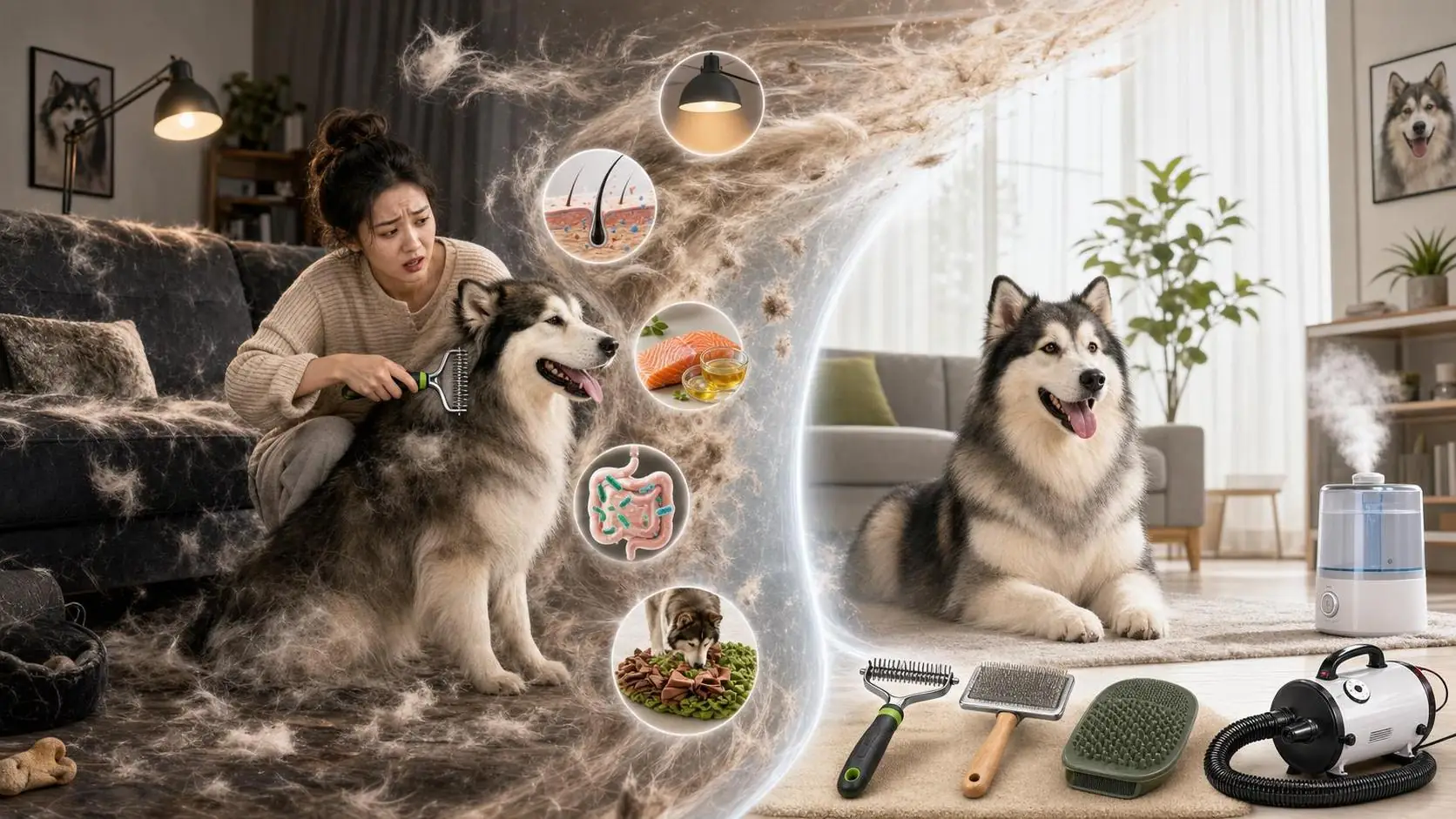
Living with a constant layer of dog hair on every dark-colored surface can push even the most devoted pet parent to the edge. While regular shedding is normal, the sheer volume that some dogs produce often points to under-the-radar triggers that generic advice misses. Uncovering these hidden culprits and applying targeted dog shedding relief strategies lets you tackle the root of the problem instead of just chasing fur with a lint roller.
The Overlooked Triggers That Make Shedding Go Into Overdrive
Most owners blame the changing seasons, but modern dogs face a mix of daily disruptions that keep follicles in a perpetual release cycle. Identifying these silent drivers is essential if you want to stop excessive dog hair loss before it overwhelms your home.
Photoperiod Confusion from Artificial Lighting
A dog’s biological clock relies on shifts in natural daylight to signal when to grow or drop an undercoat. When a dog lives primarily indoors under constant artificial light, the brain loses track of the season. This photoperiod confusion traps many double-coated breeds in a year-round, low-level shedding state that never fully shuts off.
Gut Microbiome Imbalances and Nutrient Extraction
Even a premium diet fails if the gut cannot absorb key nutrients. An imbalance in intestinal bacteria reduces the uptake of biotin, zinc, and essential amino acids required to anchor hair shafts firmly in the follicle. The result is a dull, brittle coat that releases strands at the slightest friction. Adding fermented foods or canine-specific probiotics often improves coat density within weeks.
Silent Inflammation From Processed Ingredients
Highly refined carbohydrate sources and artificial preservatives found in many commercial kibbles promote a state of low-grade systemic inflammation. Inflamed skin disrupts the normal growth-anagen phase of hair, pushing follicles prematurely into the telogen resting phase where shedding occurs. Swapping to a gently cooked or raw whole-food formula under veterinary guidance frequently produces a dramatic turnaround.
Low-Grade Anxiety and Cortisol Spikes
Not all stress looks like panic. Boredom, inconsistent daily routines, and lack of mental engagement raise baseline cortisol levels enough to shorten the hair growth cycle significantly. This type of emotional shedding often appears uniform across the body and ramps up quietly over time.
Practical, Vet-Backed Ways to Get Shedding Under Control
Once you recognize the true causes of dog shedding and solutions that match them, you can build a routine that genuinely reduces the fur load without creating frustration for you or your dog.
Feed for Follicle Strength With the Right Fat Profile
Coat resilience depends on a steady supply of animal-sourced protein and cold-water omega-3s. Look for named meat meals, wild-caught salmon oil, or Antarctic krill oil on the ingredient panel. These deliver EPA and DHA in a bioavailable form that cellular membranes in the follicle use directly to produce strong, elastic hair. Many owners report a visible decrease in loose fur after six to eight weeks on a targeted skin and coat supplement.
Match Your Grooming Tools to Your Dog’s Coat Texture
The category of best de-shedding tools for heavy shedders is not one-size-fits-all. A short, dense Labrador-type coat responds best to a rubber curry mitt used in firm circular motions to pull up dead undercoat. Long-haired breeds with fine silk textures need a wide-toothed comb followed by a slicker brush to prevent matting that traps loose fur. For double-coated breeds like Malamutes, an undercoat rake with rotating tines removes packed fluff without cutting the protective guard hairs. Investing in a high-velocity pet dryer for post-bath blowouts can eject a week’s worth of loose coat outdoors in minutes.
The Rinse-Out Ritual That Releases Dead Coat
Bathing technique matters as much as frequency. Pre-soak with lukewarm water to open follicles, then massage a sulfate-free aloe shampoo fully into the skin. Let it sit for three minutes before rinsing to loosen dead hair. Follow with a silicone-free conditioner and finish with a thorough blow-dry using cool air. This process can release up to 60% of the already-detached fur that brushing alone misses.
Design a Low-Allergen, High-Humidity Indoor Space
Skin barrier function drops sharply when indoor humidity falls below 40%. Running a cool-mist humidifier near your dog’s main resting area prevents the microscopic cracking that triggers increased dander and hair loss. Pair this with a vacuum equipped with a HEPA filter to remove airborne allergens that provoke scratching, and wash bedding weekly in fragrance-free detergent.
Strategic Mental Work to Blunt Stress-Induced Shedding
Replacing ten minutes of passive time with a snuffle mat session or a structured nose-work game lowers cortisol measurably. This type of enrichment exercises the brain’s olfactory system, which has a direct calming effect on the endocrine loop that governs hair follicle cycling. Consistency matters more than intensity here.
When a Veterinary Visit Becomes Non-Negotiable
Shedding that leaves symmetrical bald spots, accompanied by darkened or thickened skin, signals a hormonal disorder such as hypothyroidism or Cushing’s disease. A simple blood panel can rule these out. Likewise, if you notice moths-wing edges on thinning ear flaps or crusty skin, a vet needs to check for demodex mites or autoimmune dermatoses.
Making Shedding Predictable Instead of Panic-Inducing
A fur-free home is an unrealistic goal, but a manageable amount of loose hair is well within reach. By treating your dog’s coat as a visible report card for internal health, you shift from reactive cleaning to proactive care. When the gut gets the right fuel, the grooming tools match the coat architecture, and the living environment supports skin hydration, shedding becomes a predictable rhythm — not a messy mystery.