
You refill the water bowl. It’s fresh, filtered, and served in a ceramic dish you chose to match the kitchen. Your cat walks over, sniffs it, and then stares at you as if you’ve offered them lukewarm soda. Then they walk away.
It’s easy to call it pickiness. But the truth is deeper — and much older.
Cats descend from desert-dwelling wildcats, primarily the African wildcat. In that arid environment, standing water was scarce. Instead, cats got almost all the moisture they needed from their prey — a mouse is roughly 70% water. Over thousands of years, their bodies adapted. Their thirst drive became muted. Even when slightly dehydrated, a cat’s brain simply doesn’t scream “go drink” the way ours does. Add to that their extraordinary kidneys, which can produce highly concentrated urine to preserve water, and you’ve got a species built to survive on minimal liquid intake.
Here’s the problem: survival mode isn’t the same as thriving mode. Chronic low-level dehydration puts stress on the urinary system. In domestic cats, it’s a major contributor to crystals, bladder sludge, and even life-threatening blockages. So if you’re running a pet supply store or just trying to keep a single cat healthy, hydrating that desert-brained feline becomes a daily mission.
The good news? You can outsmart evolution.
Think Like a Cat: The Hydration Mindset
Don’t fight instinct — work with it. Your cat doesn’t see a water bowl and think “hydration station.” They see a still, silent pool in a vulnerable spot. In nature, still water often means stagnant, bacteria-laden, and unsafe. That’s why many cats are magnetically drawn to dripping faucets or the sound of a flushing toilet. Movement signals freshness. It’s not weird; it’s wisdom passed down through wild genes.
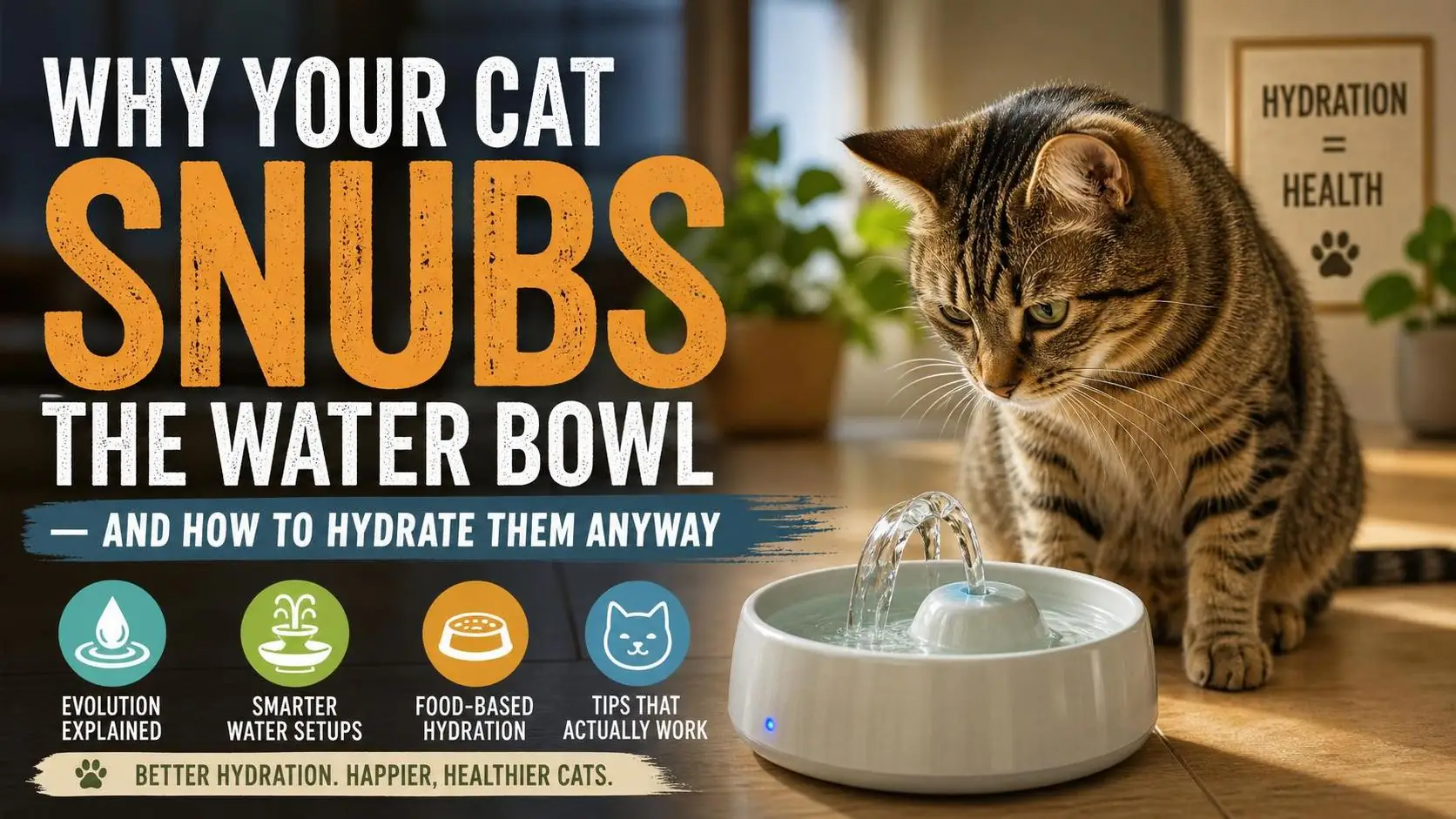
So, first principle: move the water. A cat water fountain is the most straightforward translation of this instinct. It circulates, aerates, and often filters water, making it smell and taste more like a clean stream than a stale puddle. You’ll see some cats transform from zero to sixty on drinking when a fountain enters the picture. If you can, place multiple fountains or bowls in different rooms — away from food and litter boxes. Cats are hardwired to avoid contaminating their water source with potential pathogens from prey or waste. A bowl tucked behind the sofa might get used more than the one next to their kibble.
The Moisture Swap Most People Miss
If a cat’s ancestors hydrated through food, why not lean into that? Canned, raw, or gently cooked diets with moisture content around 75–80% mimic the water profile of natural prey. Transitioning even one meal a day from dry to wet can radically shift a cat’s hydration status. You’re not “adding” water — you’re restoring what their biology expects.
You can push this further by turning meals into “cat soup.” Add a tablespoon or two of warm water, or sodium-free bone broth, to wet food and stir. Many cats lap up the flavored liquid eagerly. A word of caution: don’t use store-bought broths with onion, garlic, or excess sodium. Make it yourself or choose a pet-specific product. The warm temperature also releases aroma, and for cats, smell is the gateway to interest. If it doesn’t smell like food, they may ignore it entirely.
Make Water Feel Like a Discovery, Not an Obligation
Cats are neophilic — they’re attracted to novelty. Use that. Drop an ice cube made from diluted tuna water (water-packed tuna, no salt) into their bowl and let them bat it around. The play triggers a drink shortly after. Place a clean shot glass of water on your nightstand, and suddenly your cat wants that water, not the one in their bowl. Is it illogical? Yes. Does it work? Often.
Watch their whiskers, too. Deep or narrow bowls can cause whisker fatigue, an overstimulation that makes eating or drinking uncomfortable. Switch to wide, shallow dishes — a pasta bowl works wonders — and use stainless steel or glass rather than plastic, which can harbor bacteria and alter taste.
A Quick Test You Can Do at Home
Gently pinch the skin between your cat’s shoulder blades and release. If it snaps back instantly, they’re likely well-hydrated. If it tents or returns slowly, encourage more intake. Also peek at the litter box: small, hard, dark-yellow clumps often point to insufficient water.
Don’t wait for a crisis. Cats hide discomfort masterfully, and urinary issues escalate fast. Hydration isn’t a bonus — it’s the baseline for kidney health, coat quality, and energy.
Your cat isn’t broken. They’re just running software from 10,000 years ago while living in your air-conditioned living room. Adapt their environment to that ancient code, and you’ll see the difference — one trip to the water bowl at a time.