
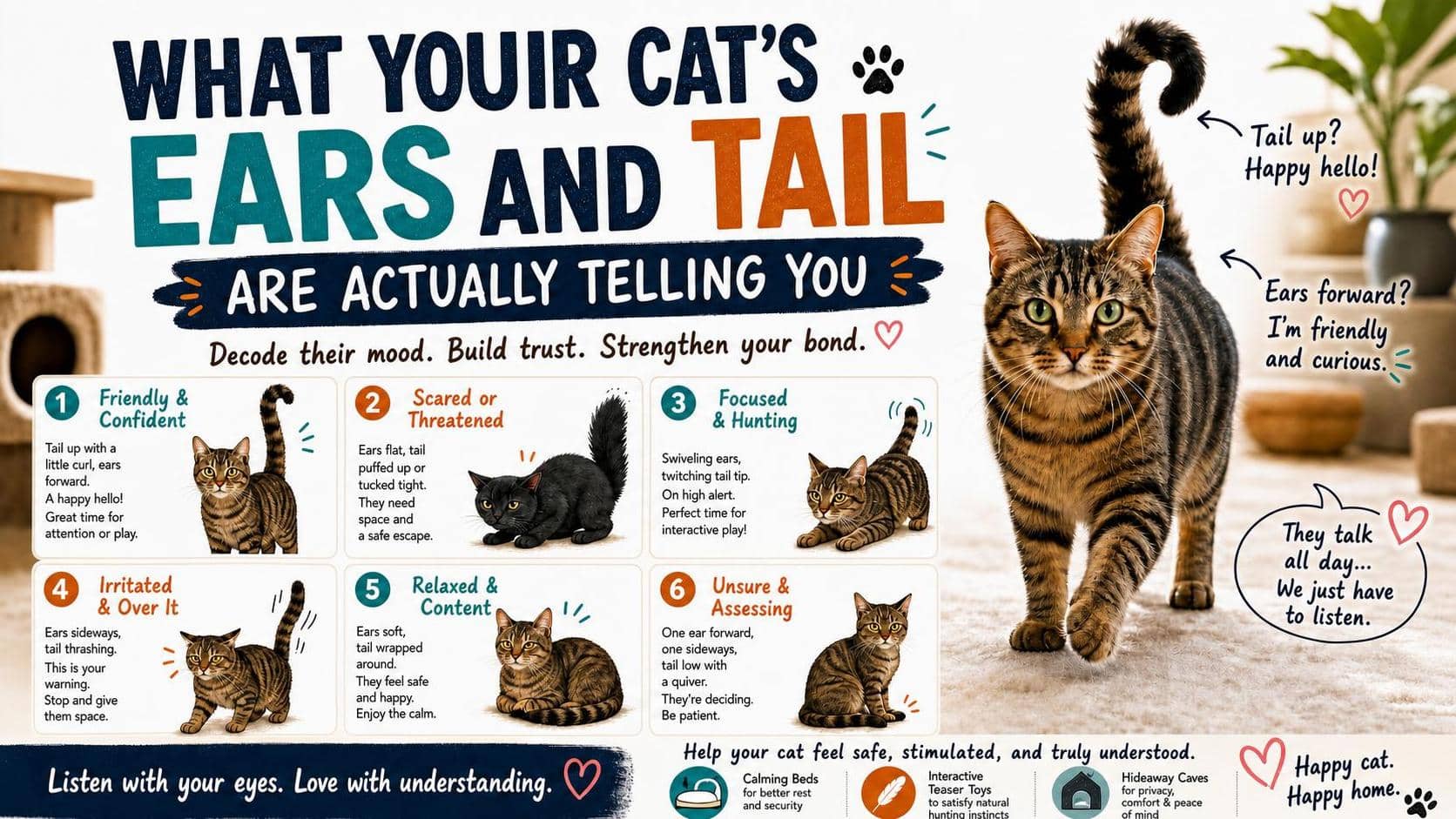
I used to think my tabby Leo just flicked his tail because he was indecisive. Turns out he’d been giving me full sentences — I just didn’t know the language.
Cat body language can feel like a puzzle, but once you start watching the ears and tail together, everything clicks. Those swivels, twitches, fluffs, and tucks aren’t random. They’re your cat’s way of announcing their mood before a single meow comes out.
Here are six ear-and-tail combos I see all the time, what they mean, and how you can respond so your cat feels heard.
1. Straight-Up Tail with a Little Curl at the Top, Ears Pointed Forward
If your cat walks into the room carrying their tail like a flag, pointed ears and all, you’re getting a proper hello. This is the “I’m genuinely happy you exist” posture. My Leo does this every morning, and the tip of his tail does this tiny question-mark curl that melts me. It’s pure friendliness and confidence. Sometimes they’ll even wrap that upright tail around your shin — a feline version of a quick hug. Don’t ignore it. Bend down, offer a slow blink, or grab a wand toy for a few minutes of play. It builds trust more than you realize.
2. Ears Flattened Against the Head, Tail Big and Bristled (or Tucked Tight)
Ever seen your cat turn into a little airplane? Ears pinned back, body low, tail either puffed up like a pipe cleaner or tucked so far under it nearly disappears. This one’s pretty straightforward: they’re terrified or feeling seriously threatened. A puffed-up tail is a bluff — “I’m bigger than I look” — while the tucked tail says “please don’t hurt me.” It doesn’t matter if the trigger is a barking dog, a stranger, or a sudden loud noise. Your job is to remove the scary thing or give them an escape route. A covered cat cave or a high-up shelf works wonders. Let them decompress alone; don’t scoop them up for a cuddle right then.
3. Swiveling Ears and a Twitchy Tail Tip
There’s a specific look when a cat locks onto something interesting: ears rotating like they’re tuning into radio signals, body frozen except for the very tip of the tail twitching rapidly. That’s full-on hunter mode. It doesn’t matter if it’s a real fly or a red dot. The swiveling ears pinpoint the sound, the twitching tail bleeds off a little predatory excitement. I see this whenever I pick up the feather wand — Leo’s entire being locks in. This is the best time to engage them with an interactive toy that mimics prey. Ten minutes of focused stalking and pouncing can prevent a lot of the midnight zoomies later.
4. Ears Turned Sideways or Flat-Back, Tail Thrashing Like a Whip
Lots of people mistake a wagging cat tail for a happy dog tail. Huge mistake. When the ears go sideways (sometimes called “airplane ears” but tenser) and the tail starts whipping or thumping heavily against the floor, your cat is not having a good time. This often happens during over-petting — three strokes too many and suddenly the tail is slapping. The ears signal irritation, the thrashing tail is the final warning. I learned this the hard way. If you see it, stop touching them immediately. Just stop, look away, and give them space. They’re not being mean; they’re communicating a boundary. Respect it and you’ll avoid the swat.
5. Tail Wrapped Around the Body, Ears Soft and Neutral
When your cat sits like a neat little loaf with their tail curled around their own paws, ears upright but relaxed, they’re in a state of pure contentment. This is the cat version of a cozy blanket on a rainy day. Sometimes the tail will curl around a neighboring cat or the arm of the couch instead — same energy. No tension anywhere. I love this posture because it’s when Leo is most open to quiet bonding. Slow blinks, gentle cheek rubs, or just sitting nearby without demanding anything reinforces that this safe, relaxed feeling is shared. A self-warming bed or a sunny window perch tends to bring this out even more.
6. One Ear Forward, One Ear Sideways, Tail Low with a Slight Quiver
This is the “I’m not sure yet” face. One ear tracks forward toward something interesting — maybe a visitor’s voice — while the other stays half-cocked toward safety. The tail hangs a bit low, sometimes quivering near the base. They’re working through a decision: investigate or retreat? My cat does this whenever a new piece of furniture shows up. Don’t rush them. Toss a couple of high-value treats a few feet away and let them approach on their own timeline. Forcing attention here will only make them more suspicious. Patience teaches them that new things aren’t a threat.
The Tail End of the Story
Your cat talks all day long, just not with words. Ears and tails are the loudest voices they have. Once you start tuning in, you’ll notice that everything they do is an attempt to connect — or to ask for some peace. Pay attention, and you’ll end up with a far more relaxed, trusting cat.
Looking for ways to make your cat feel safer and more understood? Check out our latest [calming beds, interactive teaser toys, and hideaway caves] — designed for real feline needs, straight from decoding their secret language.